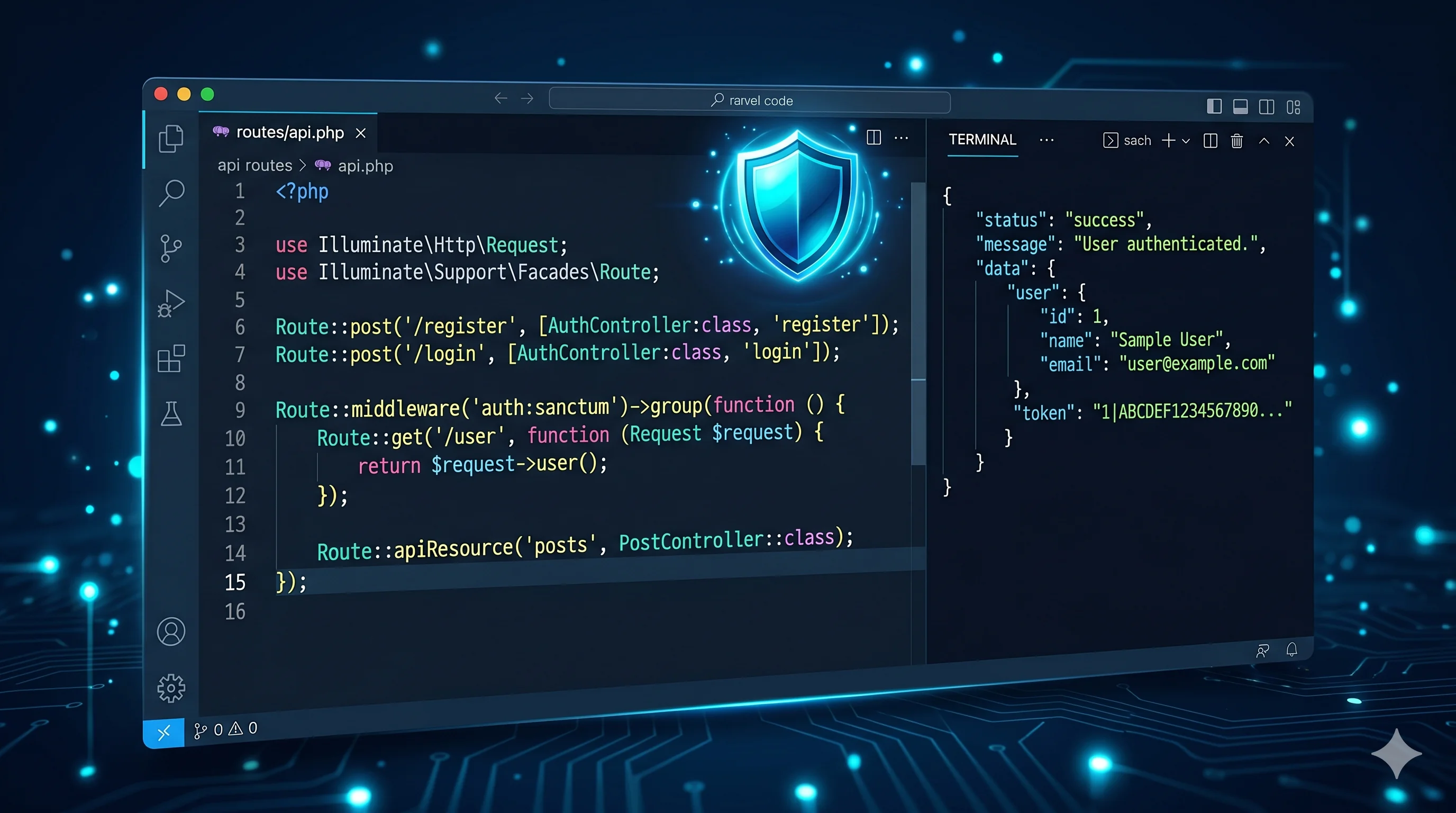

Practical overview
API integration connects your business systems and removes manual data entry.
Getting it right requires planning before a single line of code is written.
What API integration actually means for a business
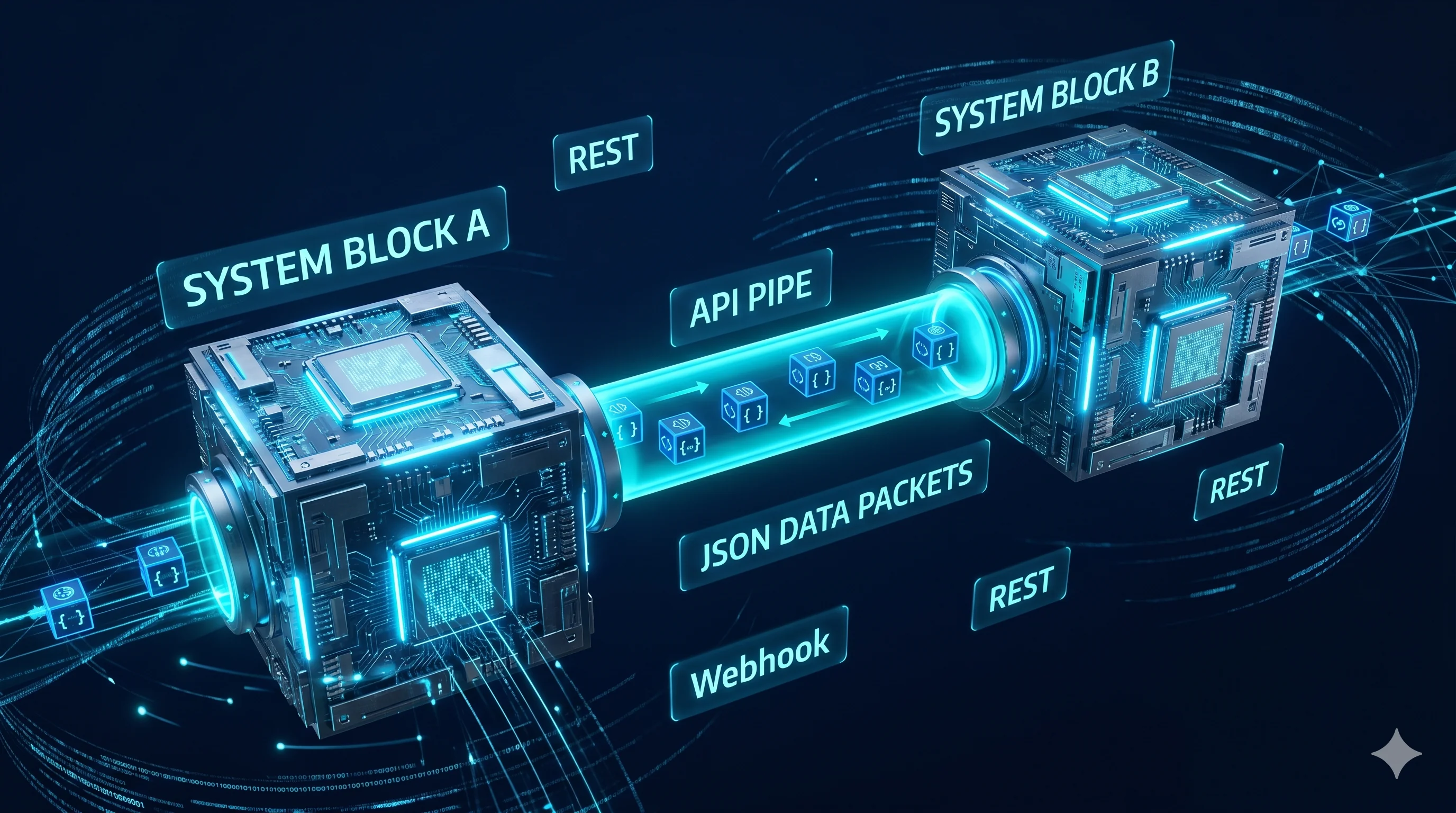
API integration is the process of connecting two or more software systems so they can exchange data automatically. Common examples include connecting a website to a payment gateway, syncing an ecommerce store with an inventory system, pushing leads from a contact form into a CRM, or pulling shipping rates from a courier service in real time.
The technical work involves writing code that sends requests to a third-party system and handles the response correctly. The business value is automation, accuracy and reduced manual data entry across platforms.
What makes an integration complex
Simple integrations like a payment gateway or email service take one to three days. Complex integrations that involve two-way data sync, webhook handling, retry logic, data transformation between schemas, or multiple API dependencies can take two to four weeks.
The most common failure point is not the initial connection but the error handling. A robust integration must handle rate limits, authentication token expiry, malformed responses and partial failures without breaking the main application.
Choosing the right developer for API work
API integration requires a developer who understands both the technical spec and the business logic. They need to read API documentation carefully, test edge cases thoroughly and build logging so failures are visible and diagnosable.
Anas Tanveer at anastanveer.com has integrated payment gateways, CRM systems, ERP platforms, shipping APIs and third-party data feeds for clients in Dubai and across the UAE. UK businesses can work with ARS Developer at arsdeveloper.co.uk for the same services.
Webhook vs polling: choosing the right pattern
Polling means your application requests data from a third-party system on a schedule — every minute, every hour or on user action. Webhooks mean the third-party system pushes data to your application when something changes. Choosing incorrectly creates either unnecessary API load and rate-limit risks, or missed events and delayed data updates.
The right pattern depends on the data freshness requirement and whether the third-party system supports webhooks reliably. Payment processing, order fulfillment and CRM sync generally benefit from webhooks. Batch reporting, scheduled data exports and systems with unreliable webhook delivery benefit from polling. A good API integration developer will identify this requirement early, implement webhook signature verification for security and build retry logic so failed webhook deliveries do not silently drop data.
Documentation quality predicts integration difficulty
Before starting any API integration project, the developer should audit the third-party API documentation. Well-documented APIs with sandbox environments, clear error codes, versioning policies and official SDKs are dramatically faster to integrate than underdocumented APIs with vague error responses and no test environment.
For Dubai and UAE business integrations, common systems include payment gateways like Telr, Network International and Stripe, ERP connectors for Oracle NetSuite or SAP, property listing platforms, government portals and local logistics APIs. Each has a different documentation quality level. A developer who has worked with these systems before has already absorbed the undocumented edge cases — which is why domain-specific experience matters more than general API development skill in most integration projects.
Practical checklist
Map every data field that needs to move between systems before development starts.
Confirm the third-party API has a sandbox environment for testing.
Define error handling behaviour for every failure scenario.
Agree on logging and monitoring requirements before launch.
Plan for API versioning changes from the third party.
How to turn this into a real project decision
Start by writing the business problem in one line. For example: the website is slow, the Shopify product page is confusing, the WordPress site does not generate quality leads, or the Laravel dashboard cannot support the workflow anymore. A clear problem statement makes the technical decision easier.
Next, separate the requirement into user experience, backend logic, SEO, speed, integrations and content. This prevents the common mistake of redesigning a page when the real issue is data structure, plugin conflict, weak copy, poor mobile UX or missing automation.
For Dubai, UAE and international clients, the strongest web solution is usually the one that improves trust, reduces manual work, loads fast on mobile and gives visitors a clear reason to contact the business. That is the standard I use when planning Laravel, WordPress, Shopify, ecommerce, dashboard and SEO-focused work.
FAQs
How long does an API integration take?
Simple integrations like payment gateways take one to three days. Complex two-way syncs with multiple systems take two to four weeks.
What happens when the third-party API changes?
A well-built integration includes version pinning and clear documentation so updates can be applied without rebuilding from scratch.
Do I need ongoing maintenance for API integrations?
Yes. Third-party APIs change, authentication tokens expire and rate limit policies update. Budget for quarterly maintenance reviews on business-critical integrations.
Ready to discuss this?
Send your website URL, platform, issue and goal — I'll reply with a practical direction within 4 hours. Free 20-min discovery call available.
Message on WhatsApp — Free 20-min callRelated service
Looking for hands-on help with this?
API Integration ServicesRelated services
Need help applying this to your project?

Anas Tanveer
Full-Stack Developer in Dubai with 7+ years in Laravel, WordPress, Shopify, business dashboards, APIs, and SEO-ready web systems.
View profile