

Anas Tanveer logoAnas TanveerDubai Web Problem Solver

Strategy

Web Developer Canada Cities: Toronto, Vancouver, Calgary, Ottawa and Montreal

A comprehensive guide to hiring web developers across Canadian cities — comparing CAD rates, what each province needs, and how remote delivery works for Canadian businesses.

7 min read1,222 wordsPublished Updated
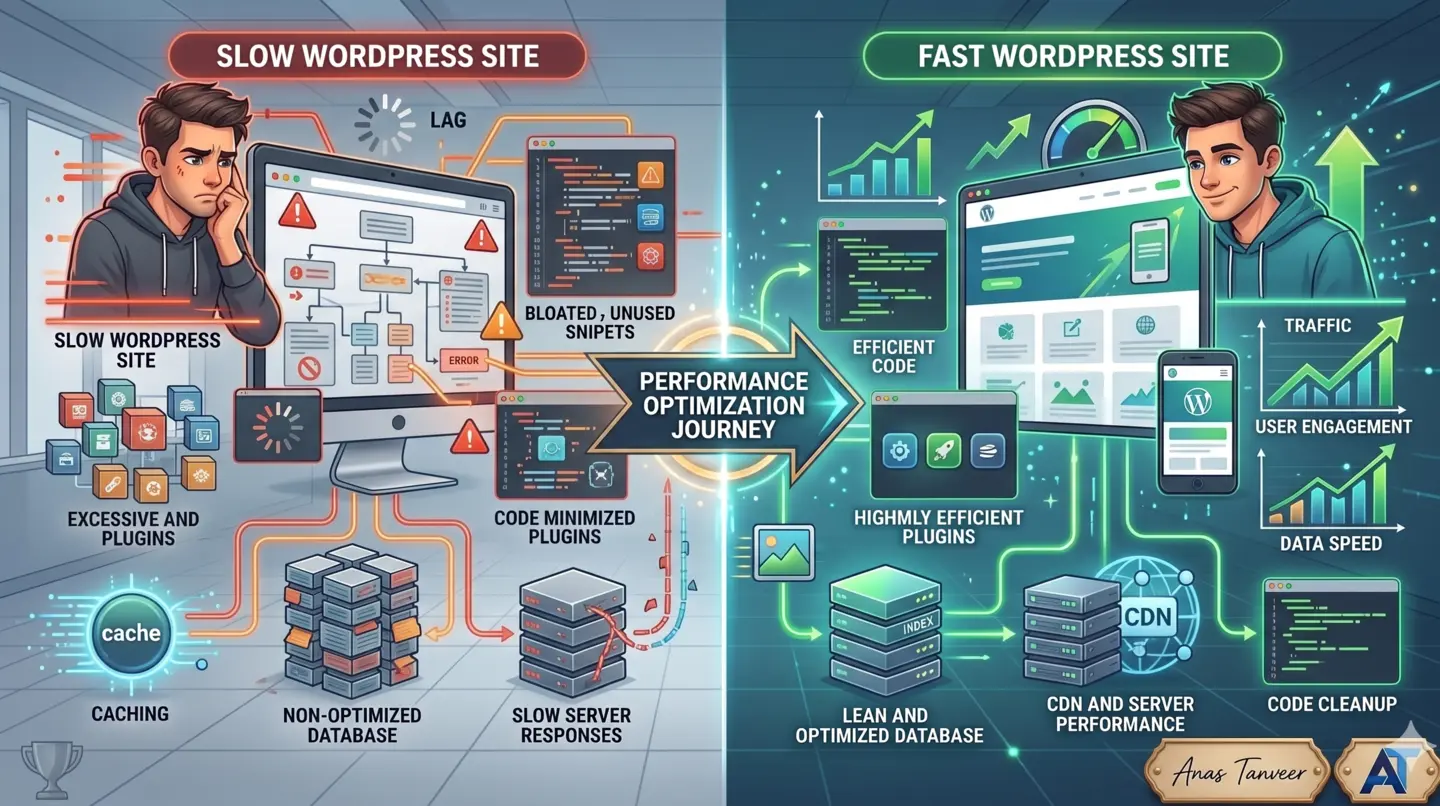
Web Developer Canada Cities: Toronto, Vancouver, Calgary, Ottawa and Montreal article visual

Practical overview

Canadian businesses hiring web developers face a country-sized talent market: Toronto, Vancouver, Calgary, Ottawa, Montreal, and Edmonton each have distinct rates, provincial tax requirements, and industry specialisations. This guide helps Canadian businesses navigate city-specific web development markets and make informed hiring decisions.

The most important Canadian-specific insight: provincial tax configuration (GST, HST, PST, QST) varies by province and must be correctly implemented from day one — not retroactively fixed after complaints about billing errors. Get this requirement confirmed before engaging any Shopify, WordPress, or custom developer.

Canadian city web developer rates in CAD

Toronto web developers charge the highest Canadian rates: senior freelancers charge CAD 90–160/hour, agencies charge CAD 120–220/hour. Vancouver senior developers charge CAD 85–145/hour. Calgary and Edmonton developers charge CAD 70–120/hour for comparable skill. Montreal developers charge CAD 65–130/hour.

Remote delivery has normalised rates across Canadian cities. A senior Laravel developer in Calgary or Edmonton delivers the same quality as a Toronto equivalent — timezone coverage (Mountain, Pacific, or Eastern) is manageable for most Canadian project communications.

For Canadian businesses evaluating total project cost: a Toronto agency engagement at CAD 150/hour with overhead often costs 2–3× the same deliverable from a senior remote developer at CAD 80–90/hour. Platform choice (Shopify vs WooCommerce vs custom Laravel) has a much bigger impact on total project cost than developer location.

Canadian provincial tax: what web developers must configure correctly

Alberta (Calgary, Edmonton): GST only (5%). No provincial sales tax. The simplest Canadian tax setup for Shopify and WooCommerce.

Ontario (Toronto, Ottawa): HST (13%). One combined federal-provincial rate. Most Shopify stores default to Ontario configuration.

British Columbia (Vancouver): GST (5%) + PST (7%) = 12% effective rate. PST applies to most goods but not all services. Shopify needs correct BC PST configuration.

Quebec (Montreal): GST (5%) + QST (9.975%) = 14.975% effective rate. QST registration required for businesses over CAD 30,000 revenue. Shopify QST configuration is a hard requirement for Montreal ecommerce.

Manitoba, Saskatchewan, Nova Scotia, New Brunswick, PEI, Newfoundland: each has different HST or PST rates. A Shopify developer working on a national Canadian store must configure all provincial rates correctly.

Montreal: the bilingual web development requirement

Montreal is Canada's only major bilingual business city, with strong demand for English-French bilingual web development. WPML, Polylang, and Shopify Markets are the standard tools for bilingual websites and stores — but correct hreflang (en-CA, fr-CA) implementation, French content structure, and French-language SEO require specific expertise.

Shopify stores targeting Montreal and Québec consumers need French-language product descriptions, navigation, checkout copy, and transactional emails. Shopify Markets handles multi-language stores but requires careful setup — particularly for Québec GST/QST configuration and French-language SEO.

Laravel applications for Montreal businesses often have French and English interface requirements. This affects database content architecture, email templating, and the frontend i18n (internationalisation) layer — all of which must be planned before development starts, not retrofitted later.

Why Canadian city markets differ from each other

Toronto is Canada's financial and tech capital — highest developer rates, highest volume of SaaS and fintech projects, strongest Shopify Plus and Laravel expertise, and the most agency competition. A well-managed senior remote developer typically delivers the same quality at 30–50% lower total cost than a Toronto agency for defined-scope projects.

Vancouver has strong tech sector demand (Amazon, Microsoft, EA Games ecosystem), high Shopify expertise for Canadian D2C brands, and Pacific timezone availability for US-facing businesses. Rates are close to Toronto levels for senior specialists.

Calgary and Edmonton serve Alberta's energy-driven economy — demand for operational dashboards, field management tools, and ERP integrations is higher than in other Canadian cities. Alberta's GST-only tax structure simplifies Shopify and payment configuration.

Ottawa's government-adjacent tech sector drives demand for secure Laravel applications, document management systems, and PIPEDA-compliant platforms. High demand from government contractors and public sector adjacent businesses.

Montreal is unique in its bilingual requirement — English and French content architecture, hreflang en-CA and fr-CA implementation, Québec QST configuration, and French-language SEO are hard requirements, not optional extras.

Canadian payment and tax configuration: what every developer must know

Moneris is Canada's largest payment processor and is widely expected by Canadian businesses — especially in Ontario and Quebec. A Shopify or WooCommerce developer without Moneris integration experience is missing a key Canadian ecommerce requirement.

Stripe Canada supports all Canadian provinces, has strong developer tooling, and processes in CAD natively. For most Canadian ecommerce builds, Stripe Canada is the pragmatic choice — but Moneris remains the preference for enterprise and brick-and-mortar businesses.

Interac is Canada's domestic debit payment network. Shopify supports Interac Online through Shopify Payments (Stripe). WooCommerce requires a gateway plugin for Interac support. For any Canadian checkout, the absence of Interac is a missed conversion opportunity.

Tax configuration is the hardest Canadian ecommerce problem. Each province has different rules: Alberta (GST only), Ontario (HST), BC (GST + PST), Quebec (GST + QST), Maritime provinces (HST at different rates). A developer who has configured multi-province Canadian tax correctly across multiple stores is significantly more valuable than one who only knows Ontario HST.

Practical checklist

Define platform (WordPress, Laravel, Shopify, custom) before approaching any Canadian developer.

Confirm provincial tax configuration experience: GST/HST/PST/QST for your province.

For Montreal projects: confirm bilingual WordPress or Shopify expertise and hreflang implementation.

Request live Canadian portfolio examples and verify Shopify PageSpeed scores.

Confirm CAD invoicing and Canadian business registration before signing.

Agree on post-launch support, update responsibility, and response time SLA.

How to turn this into a real project decision

Start by writing the business problem in one line. For example: the website is slow, the Shopify product page is confusing, the WordPress site does not generate quality leads, or the Laravel dashboard cannot support the workflow anymore. A clear problem statement makes the technical decision easier.

Next, separate the requirement into user experience, backend logic, SEO, speed, integrations and content. This prevents the common mistake of redesigning a page when the real issue is data structure, plugin conflict, weak copy, poor mobile UX or missing automation.

For Dubai, UAE and international clients, the strongest web solution is usually the one that improves trust, reduces manual work, loads fast on mobile and gives visitors a clear reason to contact the business. That is the standard I use when planning Laravel, WordPress, Shopify, ecommerce, dashboard and SEO-focused work.

FAQs

What do web developers charge in Canada in CAD?

Junior developers: CAD 50–75/hour. Mid-level: CAD 75–110/hour. Senior specialists (Laravel, Shopify Plus, React): CAD 110–160/hour. Toronto and Vancouver agencies charge CAD 130–220/hour with overhead. Total project cost for a defined Shopify store build ranges CAD 2,000–10,000; a custom Laravel application starts from CAD 5,000.

Which Canadian city has the best web developers?

Toronto has the highest volume of senior developers for SaaS, fintech, and complex Laravel builds. Vancouver has strong Shopify and React expertise. Calgary and Edmonton have senior specialists at lower rates. Montreal has unique bilingual expertise. Quality depends on the individual developer — not the city.

Do Canadian web developers work remotely?

Yes. Canadian web development is almost entirely remote-delivered. Eastern, Mountain, and Pacific timezone coverage means Canadian businesses across all provinces can work with developers from any city. Remote delivery with structured milestones is standard practice.

Ready to discuss this?

Send your website URL, platform, issue and goal — I'll reply with a practical direction within 4 hours. Free 20-min discovery call available.

Message on WhatsApp — Free 20-min call

Related service

Looking for hands-on help with this?

Hire a Web Developer — UAE

Related services

Need help applying this to your project?

Anas Tanveer Full-Stack Developer Dubai

Anas Tanveer

Full-Stack Developer in Dubai with 7+ years in Laravel, WordPress, Shopify, business dashboards, APIs, and SEO-ready web systems.

More on Strategy

Related Articles

!

Get started today

Need help applying this to your website?

Send your current website, platform, issue and goal. I'll help you identify the practical fix for speed, SEO, Shopify, WordPress, Laravel, dashboards, APIs or ecommerce workflows.