
What Is a Technical SEO Checklist in 2026?
A technical SEO checklist 2026 is a prioritized list of code and infrastructure fixes that make a website crawlable, fast, and machine-readable for both Google and AI search engines. In 2026 it spans five stages: crawl and index, Core Web Vitals, schema markup, content architecture, and AI-search readiness.
Here is the uncomfortable truth I tell every Dubai business owner who asks why they are stuck on page three: most SEO problems are code problems. Your content might be excellent. But if Googlebot cannot render your JavaScript, if your Largest Contentful Paint is 5 seconds on a Dubai 4G connection, or if you have zero schema markup, no amount of blog writing will save you.
Technical SEO is the plumbing. It is everything under the hood that decides whether search engines can find, load, understand, and trust your pages. Content and backlinks are the visible part; the technical layer is what lets them work at all.
This article gives you a 25-point checklist grouped into five stages. For every point I tell you what it is, how to check it with a free tool, and how to fix it. Work through it top to bottom — the stages are ordered by impact.
I am Anas Tanveer, a full-stack Laravel developer in Dubai, and in the 100+ projects I have delivered across trading companies, real estate portals, and ecommerce stores, roughly 70% of ranking gains came from fixing technical issues nobody had audited — not from writing more content.
The 5-Stage Rank-Ready Audit (My Framework)
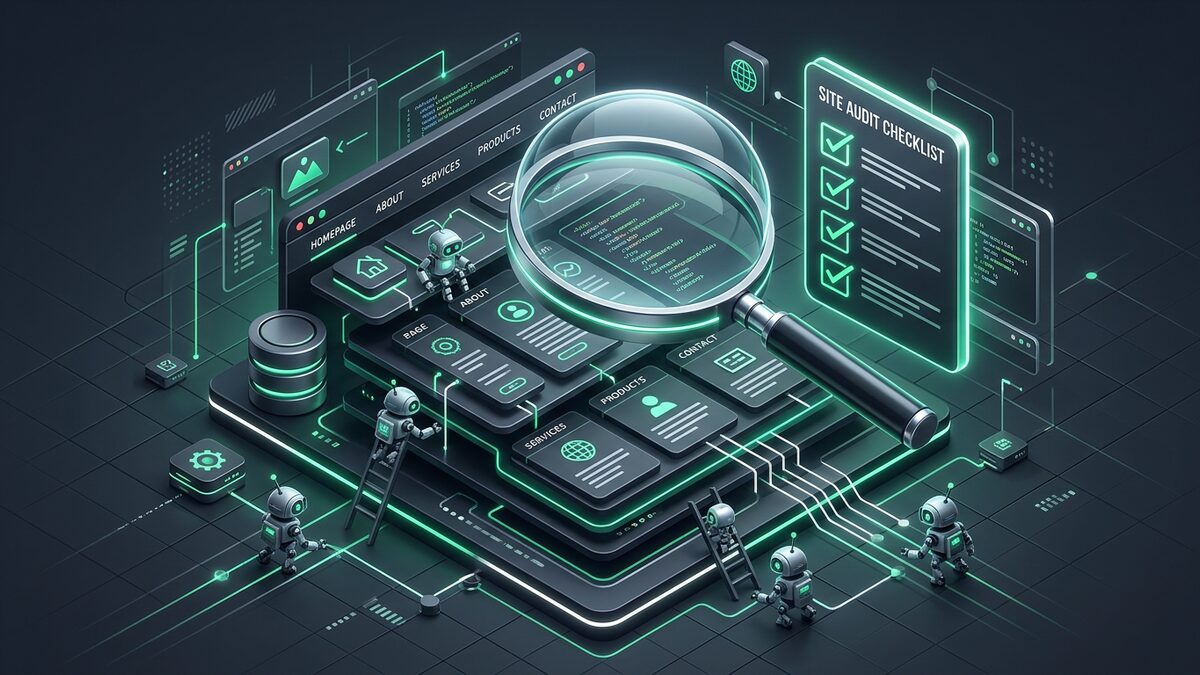
I run every site through what I call The 5-Stage Rank-Ready Audit. It is the backbone of this technical SEO checklist 2026 and it forces you to fix problems in the right order — there is no point optimizing schema on a page Google cannot even crawl.
Stage 1 — Crawl & Index: Can search engines and AI bots reach and store your pages?
Stage 2 — Speed & Core Web Vitals: Do your pages load fast enough on a real Dubai mobile connection?
Stage 3 — Schema & Entities: Can machines understand what your business and pages actually are?
Stage 4 — Content Architecture: Is your site structured so authority flows to the pages that matter?
Stage 5 — AI-Search Readiness: Are your pages quotable by ChatGPT, Gemini, and Google AI Overviews?
Decision rule: never move to the next stage until the current one is green. A blazing-fast page (Stage 2) that is blocked in robots.txt (Stage 1) earns you nothing.
Stage 1 — Crawl & Index (Can Google Even See You?)
A page that is not crawled is not indexed, and a page that is not indexed cannot rank — full stop. This is where I find the most expensive, invisible mistakes in Dubai websites, usually a leftover 'noindex' tag from a staging site.
1. Robots.txt — What it is: a file that tells bots which URLs to skip. Check it at yoursite.com/robots.txt. Fix: make sure you are not accidentally blocking /wp-admin-adjacent folders, your CSS, or your whole site with 'Disallow: /'.
2. XML Sitemap — What it is: a machine-readable map of your important URLs. Check in Google Search Console > Sitemaps. Fix: submit one clean sitemap, remove redirected or 404 URLs, and keep it under 50,000 links.
3. Noindex tags — What it is: a meta tag telling Google to exclude a page. Check with the free 'Detailed SEO Extension' for Chrome. Fix: remove noindex from any page you want ranked — I have seen entire Dubai ecommerce category pages hidden this way.
4. Indexation coverage — What it is: which pages Google actually stored. Check Search Console > Pages report. Fix: investigate 'Crawled - currently not indexed' pages; usually thin content or duplication.
5. Canonical tags — What it is: the signal that says 'this is the master version of this page'. Check the page source for rel=canonical. Fix: point product variants and filtered URLs to one canonical to stop duplicate-content dilution — critical for real estate and ecommerce sites with thousands of filter combinations.
Stage 2 — Speed & Core Web Vitals (The 3-Metric Test)
Core Web Vitals SEO is Google's measurement of real-world loading experience, and in 2026 it is a confirmed ranking signal measured on your actual mobile visitors, not a lab. In the UAE, where a lot of browsing happens on mobile over 4G/5G, a slow site quietly bleeds both rankings and conversions.
The three numbers you must hit: LCP (Largest Contentful Paint) under 2.5 seconds, INP (Interaction to Next Paint) under 200 milliseconds, and CLS (Cumulative Layout Shift) under 0.1. INP replaced the old FID metric in 2024 and is now the interactivity standard.
6. Measure real vitals — Check with PageSpeed Insights (free) and the Core Web Vitals report in Search Console. Fix: prioritize any URL group flagged 'Poor' or 'Needs Improvement'.
7. LCP / images — Fix: serve WebP or AVIF, add width and height attributes, lazy-load below-the-fold images, and preload your hero image. Oversized images are the number-one LCP killer I see.
8. INP / JavaScript — Fix: defer non-critical JS, break up long tasks, and remove heavy third-party scripts. On WordPress, audit your plugins — every plugin adds request weight.
9. CLS / layout stability — Fix: reserve space for images, ads, and embeds so content does not jump as it loads. Set explicit dimensions on everything.
10. Hosting and caching — Fix: use a CDN and a server region close to your audience. For a Dubai audience, a Middle East or Europe edge location plus full-page caching typically cuts LCP by 1-2 seconds. Expect to invest AED 1,500-6,000 for a proper speed overhaul depending on stack.
Expert insight: in the 100+ projects I have delivered, moving a WordPress site from a cheap shared host to proper caching plus a CDN routinely dropped LCP from 4.5s to under 2s without touching a single line of content.
Stage 3 — Schema & Entities (Teach Machines What You Are)
Schema markup is structured code (JSON-LD) added to your pages that tells search engines and AI exactly what your content means — that this is a business, this is a review, this is an FAQ. This schema markup guide covers the five types every Dubai business needs in 2026.
Does schema help ranking? Not directly. But it makes you eligible for rich results (stars, FAQs, sitelinks) and — increasingly important — it makes your pages easy for AI engines to quote accurately. That is the real 2026 payoff.
11. Organization schema — Establishes your brand as an entity: legal name, logo, social profiles, contact. Add it site-wide in the footer or head.
12. LocalBusiness schema — For any UAE business with a physical or service presence: address, geo-coordinates, opening hours, service area. This feeds Google Maps and local packs. Check with Google's free Rich Results Test.
13. FAQPage schema — Marks up question-and-answer blocks so they can appear as expandable results and get pulled into AI answers.
14. Article / BlogPosting schema — For every blog post: headline, author, datePublished, and image. This signals freshness and authorship, which matters for E-E-A-T.
15. Service and Breadcrumb schema — Service schema describes each offering (with priceRange in AED where sensible); BreadcrumbList shows Google your site hierarchy. Validate everything at validator.schema.org — invalid schema is worse than none.
Stage 4 — Content Architecture (Where Authority Flows)
Content architecture is how your pages link together and how your URLs are structured — it decides which pages accumulate authority and which get orphaned. A brilliant page with no internal links pointing to it is invisible.
16. URL structure — Fix: use short, keyword-clear, lowercase URLs like /web-development-dubai, not /page?id=482. Avoid changing URLs without 301 redirects.
17. Internal linking — Fix: link from high-authority pages (homepage, top blogs) to your money pages using descriptive anchor text. Aim for every important page to be reachable within three clicks of the homepage.
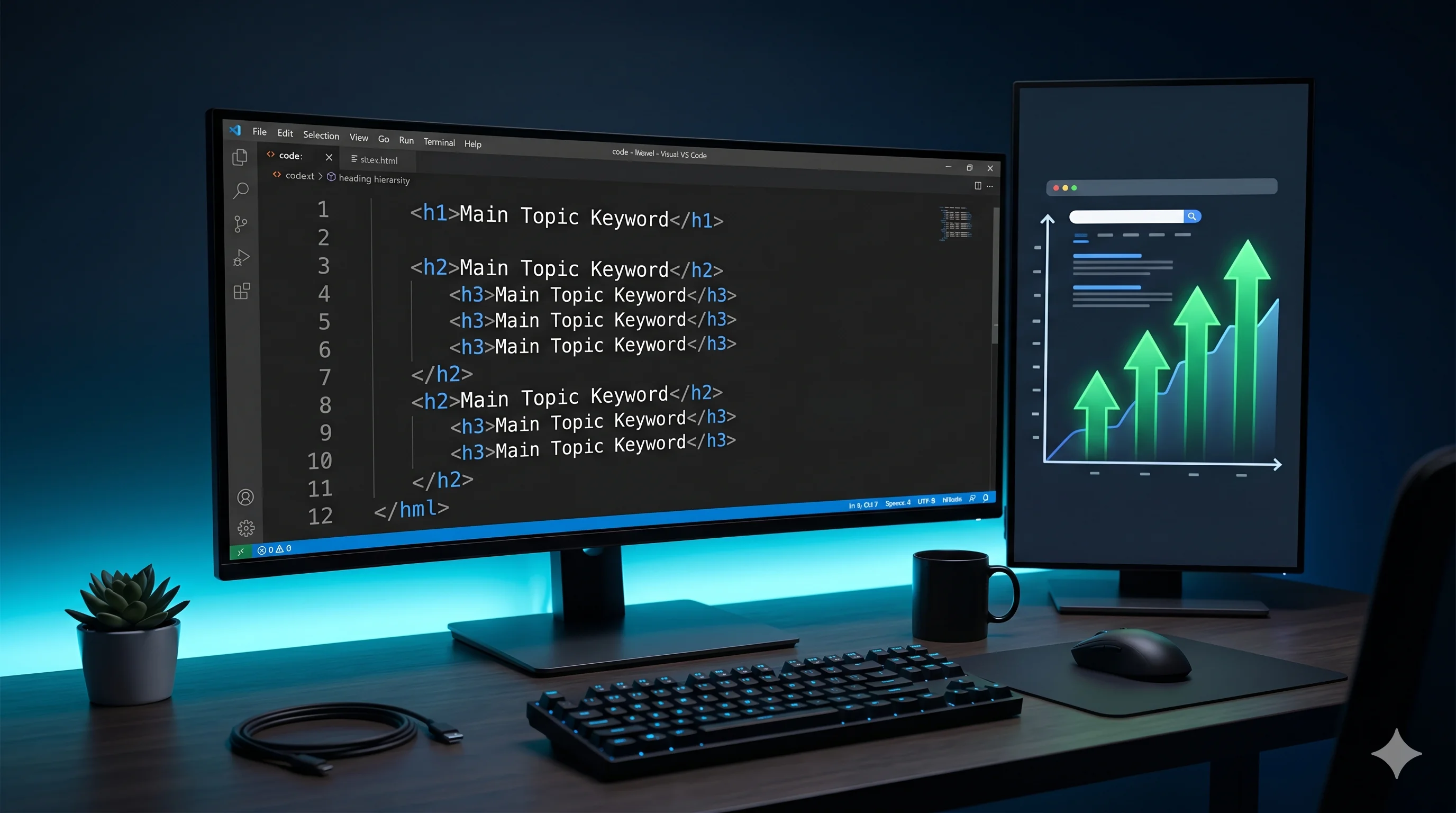
18. Heading hierarchy — Fix: one H1 per page, logical H2/H3 nesting. This is how both readers and AI parse your structure — question-style H2s answered in the first sentence win featured snippets.
19. Orphan and thin pages — Check with Screaming Frog (free up to 500 URLs). Fix: link to orphaned pages or noindex genuinely thin ones. Merge weak overlapping posts into one strong page.
20. Mobile-first and hreflang — Fix: ensure the mobile layout contains the same content as desktop (Google indexes mobile first). If you serve Arabic and English, implement hreflang tags correctly so the right language ranks in the right region — a common miss on GCC bilingual sites.
Stage 5 — AI-Search Readiness (Rank Inside the Answer)
SEO for AI search means optimizing your pages to be cited by AI systems — Google AI Overviews, ChatGPT, Gemini, and Perplexity — not just ranked in ten blue links. In 2026 a meaningful and growing share of searches never produce a classic result page; the answer is generated. If you are not quotable, you are invisible in that channel.
21. Definition-style sentences — Fix: open key sections with a clean, self-contained definition AI can lift verbatim ('Technical SEO is...'). AI engines quote sentences that make sense without surrounding context.
22. Answer-first structure — Fix: answer the question in the first sentence under each heading, then expand. This is the same pattern that wins featured snippets, and it maps directly to how AI extracts answers.
23. llms.txt and clean HTML — Fix: consider an llms.txt file summarizing your key pages, and make sure content lives in server-rendered HTML, not locked behind heavy client-side JavaScript that bots may not execute.
24. Entity clarity and consistency — Fix: keep your business name, address, and description identical across your site, Google Business Profile, and directories. AI trusts consistent entities. Author bios with real credentials feed E-E-A-T signals AI uses to decide who to cite.
25. Freshness and citable data — Fix: include specific, dated, self-contained stats (AED ranges, percentages, timeframes) and update them. AI systems favor recent, verifiable numbers over vague claims — this very checklist is written that way on purpose.
Comparison: Ranking on Google vs AI Search in 2026
Traditional Google SEO and AI-search visibility overlap, but they are not identical — and knowing the difference tells you where to spend effort.
Goal: Classic Google ranks a page in a list of results; AI search pulls a sentence or fact into a generated answer with a citation.
What wins: Google rewards authority, backlinks, and relevance; AI rewards clarity, structure, and quotable, verifiable statements.
Format: Google tolerates long, exploratory content; AI favors answer-first paragraphs and clean definitions it can extract cleanly.
Measurement: Google gives you rankings and clicks in Search Console; AI visibility is harder to track — you monitor whether your brand and facts appear in AI answers for your key queries.
Overlap: The good news is that the fundamentals — crawlability, speed, schema, clear structure — serve both. A page built for AI extraction almost always performs better in classic search too. That is why this single technical SEO checklist 2026 covers both channels rather than treating them separately.
The losing move in 2026 is optimizing only for one. Fix the technical foundation and you show up in the blue links and inside the AI answer.
Practical checklist
Stage 1 Crawl & Index: verify robots.txt, submit a clean XML sitemap, remove stray noindex tags, fix indexation gaps, and set correct canonicals.
Stage 2 Speed: hit LCP under 2.5s, INP under 200ms, CLS under 0.1 — measured on real mobile visitors in PageSpeed Insights.
Optimize images to WebP/AVIF with set dimensions, defer non-critical JavaScript, and add a CDN plus full-page caching for your Dubai audience.
Stage 3 Schema: add Organization, LocalBusiness, FAQPage, Article, and Service/Breadcrumb JSON-LD, then validate at validator.schema.org.
Stage 4 Architecture: use clean keyword URLs, one H1 per page, descriptive internal links, and keep every key page within three clicks of the homepage.
Fix orphan and thin pages with Screaming Frog, ensure mobile content matches desktop, and set hreflang for Arabic/English GCC sites.
Stage 5 AI-readiness: open sections with self-contained definitions, answer questions in the first sentence, and serve content in server-rendered HTML.
Keep business name, address, and description consistent across site, Google Business Profile, and directories, and include dated, citable AED/percentage stats.
How to turn this into a real project decision
Start by writing the business problem in one line. For example: the website is slow, the Shopify product page is confusing, the WordPress site does not generate quality leads, or the Laravel dashboard cannot support the workflow anymore. A clear problem statement makes the technical decision easier.
Next, separate the requirement into user experience, backend logic, SEO, speed, integrations and content. This prevents the common mistake of redesigning a page when the real issue is data structure, plugin conflict, weak copy, poor mobile UX or missing automation.
For Dubai, UAE and international clients, the strongest web solution is usually the one that improves trust, reduces manual work, loads fast on mobile and gives visitors a clear reason to contact the business. That is the standard I use when planning Laravel, WordPress, Shopify, ecommerce, dashboard and SEO-focused work.
FAQs
What is technical SEO?
Technical SEO is the practice of optimizing a website's code and infrastructure so search engines and AI can crawl, render, understand, and trust it. It covers crawling, indexation, site speed, Core Web Vitals, schema markup, mobile-friendliness, and site architecture — the foundation that lets your content and backlinks actually rank.
How do I check technical SEO for free?
Use Google Search Console for indexation and Core Web Vitals, PageSpeed Insights for speed metrics, the Rich Results Test and validator.schema.org for schema, and the free Screaming Frog tier (up to 500 URLs) for crawl issues. The Detailed SEO Extension for Chrome checks meta tags and canonicals instantly.
Does schema markup help ranking?
Schema markup does not directly boost rankings, but it makes your pages eligible for rich results like star ratings, FAQs, and sitelinks, and it helps AI engines quote your content accurately. In 2026 that indirect visibility — in rich snippets and AI answers — often drives more clicks than a small ranking bump would.
How is SEO different in 2026 with AI search?
In 2026 many searches end in an AI-generated answer instead of a list of links, so being quotable matters as much as ranking. AI engines favor clear definitions, answer-first structure, consistent business entities, and verifiable dated data. The technical fundamentals — speed, schema, crawlability — still serve both classic and AI search.
How long does technical SEO take to work?
Indexation changes like fixing noindex tags or sitemaps appear within days once Google recrawls. Ranking improvements from speed, schema, and architecture fixes typically show over 4-8 weeks. Larger sites and competitive Dubai niches can take up to three months for full impact as Google re-evaluates the whole domain.
Why is my site indexed but not ranking?
Being indexed only means Google stored the page; ranking requires relevance, authority, and a solid technical foundation. Common causes are slow Core Web Vitals, thin or duplicate content, weak internal linking to the page, missing schema, or strong competitors. Work through a technical SEO checklist first — most fixes are code, not content.
Ready to discuss this?
Send your website URL, platform, issue and goal — I'll reply with a practical direction within 4 hours. Free 20-min discovery call available.
Message on WhatsApp — Free 20-min callRelated service
Looking for hands-on help with this?
SEO-Friendly DevelopmentRelated services
Need help applying this to your project?

Anas Tanveer
Full-Stack Developer in Dubai with 7+ years in Laravel, WordPress, Shopify, business dashboards, APIs, and SEO-ready web systems.
View profile