

Practical overview
Next.js has become the standard for production React applications that need SEO and performance.
Here is what to look for when hiring a Next.js developer for your project.
Next.js vs plain React: the practical difference
React is a UI library. Next.js is a framework built on top of React that adds server-side rendering, static generation, API routes and image optimisation out of the box. For marketing sites, landing pages, blogs and ecommerce, Next.js is almost always the better choice because it produces pages Google can index without JavaScript execution.
Plain React SPAs are better for internal dashboards, authenticated portals and tools where SEO does not matter. If your project needs to rank in search, Next.js gives you a structural advantage from day one.
What a Next.js developer actually needs to know
A strong Next.js developer understands the difference between App Router and Pages Router, when to use server components vs client components, how to configure ISR for content that changes, and how to handle image optimisation and Core Web Vitals.
They should also understand deployment on Vercel or self-hosted Node environments, environment variable management and how to integrate headless CMS or API backends cleanly. Anas Tanveer at anastanveer.com builds Next.js applications for clients across Dubai and the UAE. UK projects are handled through ARS Developer at arsdeveloper.co.uk.
When to hire a dedicated Next.js developer
Hire a Next.js specialist when your project requires fast page loads with SEO visibility, when you are building a content-heavy site that needs static generation with dynamic fallback, or when your team needs someone who can own the entire frontend architecture including deployment and performance.
For smaller projects, a full-stack developer who knows Next.js alongside Laravel or Node is often more practical than a pure frontend hire.
App Router vs Pages Router experience
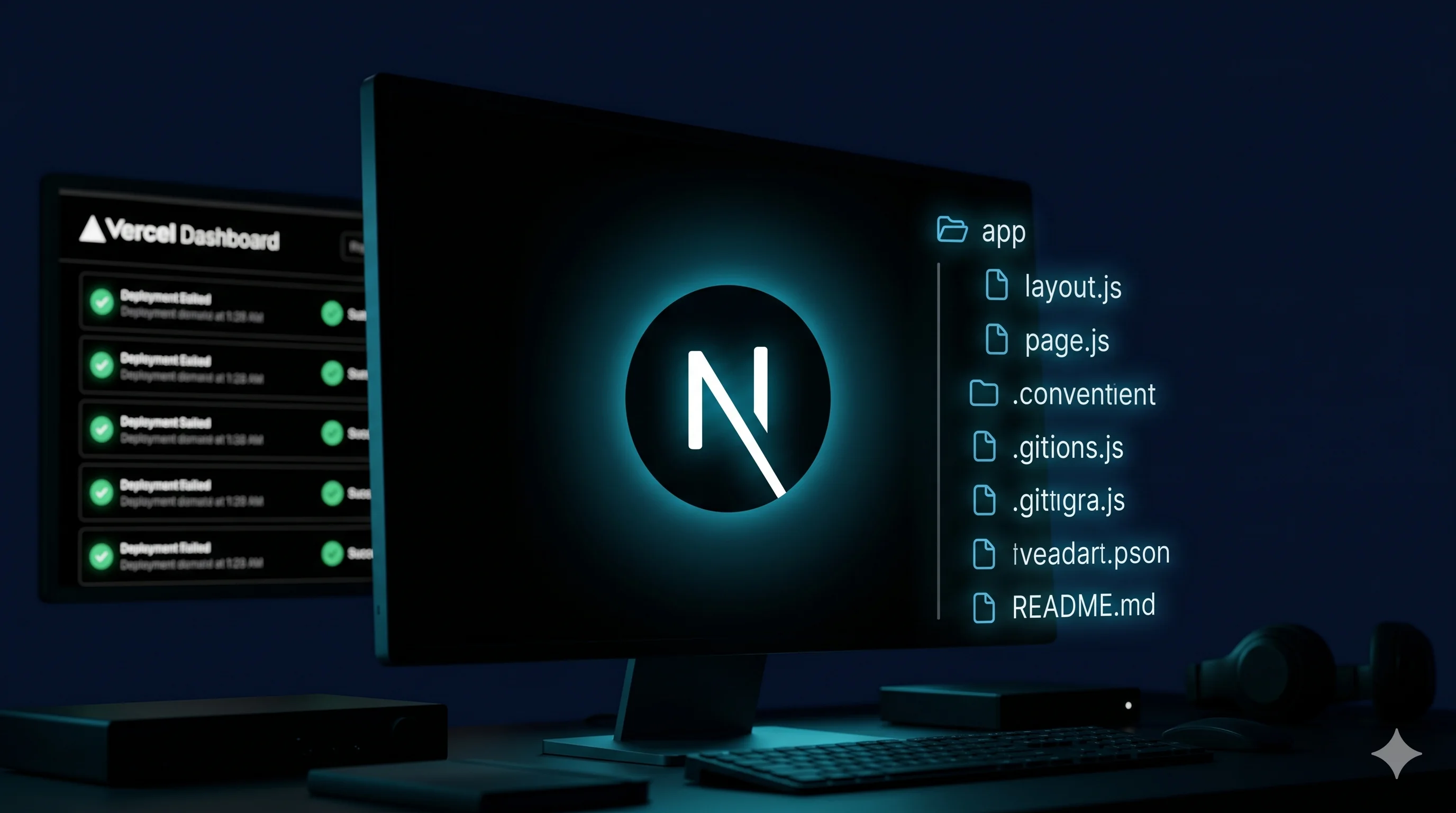
Next.js 13 introduced the App Router as a replacement for the Pages Router, and the two architectures require meaningfully different mental models. App Router uses React Server Components by default, which means data fetching, layout nesting and streaming are handled differently from anything in the Pages Router paradigm.
When hiring a Next.js developer, ask specifically whether they have shipped production projects using the App Router. Ask how they manage server components versus client components, how they handle data fetching at the layout level and how they implement loading states with Suspense. A developer who only knows the Pages Router will struggle on a modern Next.js project and may not tell you until problems appear mid-project.
Deployment and infrastructure knowledge
A Next.js developer must understand the implications of each rendering strategy on deployment. A statically exported site, an ISR-heavy site and a fully server-rendered application each have different infrastructure requirements. Vercel handles most of this automatically, but many business projects use custom servers, Docker containers or Laravel-backed APIs that need careful configuration.
Ask whether the developer has deployed Next.js outside of Vercel, how they handle environment variables across staging and production, and whether they have experience optimising cold start performance on edge or serverless environments. For Dubai and UAE-based projects, CDN configuration and regional edge caching can significantly affect real-user performance — ask whether the developer considers this in their deployment setup.
Practical checklist
Confirm experience with Next.js App Router and server components.
Ask for live URLs of Next.js projects they have shipped.
Verify they understand ISR and when to use it versus SSG or SSR.
Check Core Web Vitals scores on their existing Next.js work.
Confirm they can handle API routes and backend integration.
How to turn this into a real project decision
Start by writing the business problem in one line. For example: the website is slow, the Shopify product page is confusing, the WordPress site does not generate quality leads, or the Laravel dashboard cannot support the workflow anymore. A clear problem statement makes the technical decision easier.
Next, separate the requirement into user experience, backend logic, SEO, speed, integrations and content. This prevents the common mistake of redesigning a page when the real issue is data structure, plugin conflict, weak copy, poor mobile UX or missing automation.
For Dubai, UAE and international clients, the strongest web solution is usually the one that improves trust, reduces manual work, loads fast on mobile and gives visitors a clear reason to contact the business. That is the standard I use when planning Laravel, WordPress, Shopify, ecommerce, dashboard and SEO-focused work.
FAQs
Is Next.js better than plain React for business websites?
Yes for any site that needs search engine visibility. Next.js produces server-rendered or statically generated HTML that search engines can index without JavaScript execution.
How much does a Next.js developer charge?
Experienced Next.js developers charge between $50 and $120 per hour. Fixed-price projects start around $3,000 for a standard marketing site.
Can a Next.js developer also handle the backend?
Many handle API routes within Next.js. For complex backend logic, a full-stack developer pairing Next.js with Laravel or Node is the better hire.
Ready to discuss this?
Send your website URL, platform, issue and goal — I'll reply with a practical direction within 4 hours. Free 20-min discovery call available.
Message on WhatsApp — Free 20-min callRelated service
Looking for hands-on help with this?
Next.js Developer DubaiRelated services
Need help applying this to your project?

Anas Tanveer
Full-Stack Developer in Dubai with 7+ years in Laravel, WordPress, Shopify, business dashboards, APIs, and SEO-ready web systems.
View profile